Both Are Professional. They Just Say Different Things.
This is one of the most common questions we get from businesses ordering apparel for the first time: "Should we go embroidered or screen printed?" The honest answer is that neither is more professional — they communicate different things, and the right choice depends on what you're trying to project.
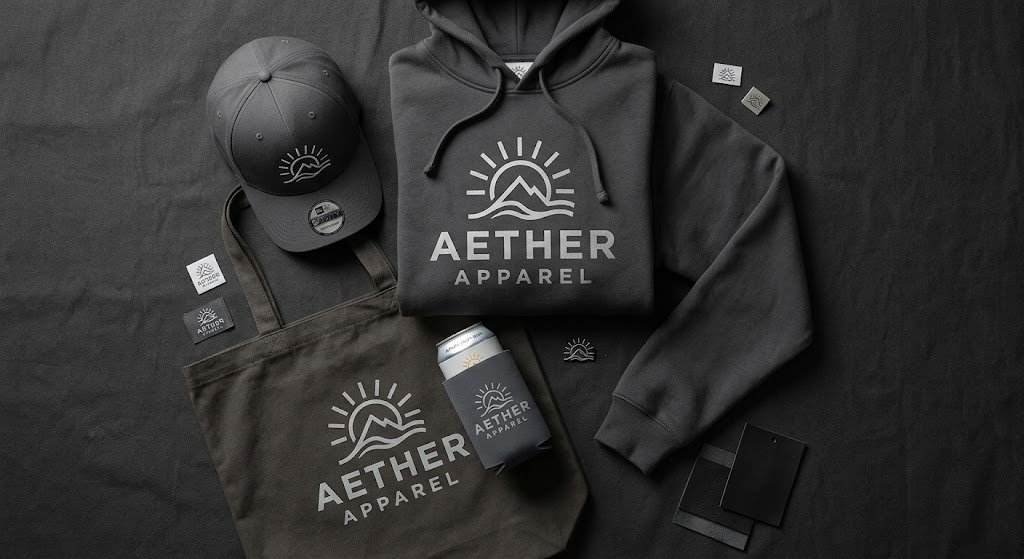
Embroidery says established, premium, conservative. It's what banks, real estate firms, country clubs, and old-school businesses choose. The thread sits raised on the fabric, the logo has dimension, and the whole garment feels more substantial.
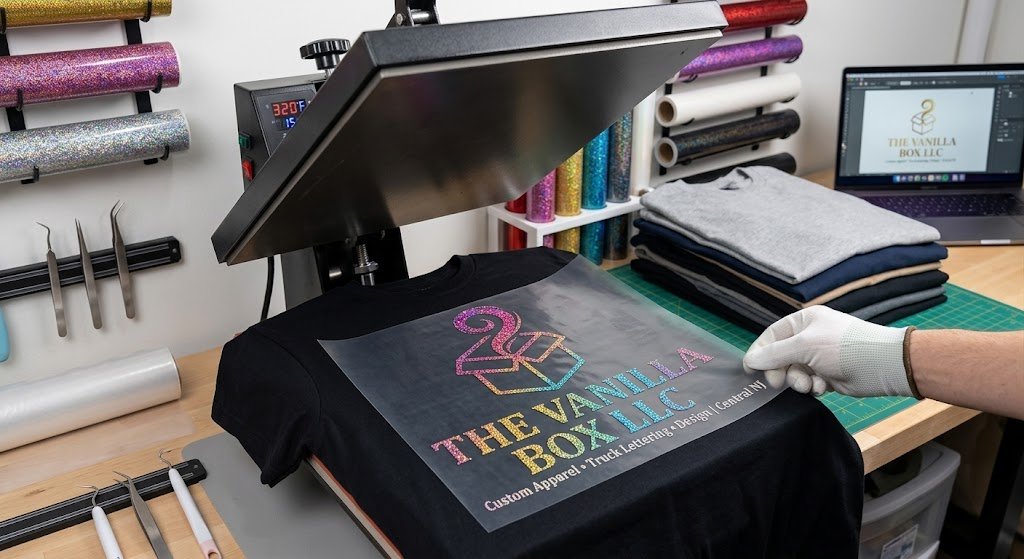
Screen printing says modern, bold, brand-forward. It's what tech companies, breweries, restaurants, retail brands, and contractors choose. The print can be huge, colorful, and graphic. It's the right choice when the design itself is meant to be the statement.
How Each Method Works
Embroidery
Embroidery uses thread stitched into fabric by computer-controlled machines. Your logo is digitized into a stitch pattern, then a multi-needle machine sews each color of thread directly into the garment. The result is a raised, textured logo that's literally part of the fabric, not sitting on top of it.
Screen Printing
Screen printing pushes ink through a fine mesh screen onto the fabric using a squeegee. Each color in the design requires its own screen and its own pass. The ink is then cured (heat-set) to bond with the fabric. The result is a flat, smooth print directly on the surface of the garment.
Where Embroidery Wins
- Polos, button-downs, and dress shirts. Screen printing on a polo looks awkward; embroidery looks like it belongs there.
- Hats. Embroidered hats are the standard. Screen printing on hats is rare and looks cheap.
- Bags, backpacks, and zip-up jackets. The thicker fabric handles embroidery well, and the logo placement is small enough that thread cost stays reasonable.
- Premium positioning. If you're charging premium prices, embroidered uniforms reinforce that.
- Smaller logos (4 inches or less). Embroidery shines at smaller sizes — left chest, sleeve, hat front. Above that size, the cost climbs fast.
- Long-term apparel. Embroidery doesn't fade or crack. We've seen 10-year-old polos with embroidered logos that still look perfect.
Where Screen Printing Wins
- T-shirts and hoodies. The full back of a hoodie or full chest of a tee — these are screen printing's natural canvas.
- Large, full-color designs. Screen printing handles photographic-quality and bold graphics that would be insanely expensive to embroider.
- Higher quantity orders. Per-shirt cost drops fast as volume goes up. A 200-shirt screen print run is dramatically cheaper per unit than 200 embroidered shirts.
- Restaurant, bar, brewery merchandise. Customers buy this stuff because they want the design — printed graphics deliver where embroidery can't.
- Bold brand statements. If you want your logo to dominate the garment, only screen printing makes that look right.
The Cost Reality
For a typical small business order of 12-25 polos with a left-chest logo, embroidery and screen printing land in roughly the same per-piece price range. Both methods have setup costs (digitization for embroidery, screen creation for printing), and at small quantities those setup costs dominate.
At higher volumes — 50+ pieces — the cost curves diverge:
- Embroidery cost stays relatively flat per piece (the machine still has to sew every stitch)
- Screen printing cost drops fast per piece (one screen prints 500 shirts as easily as 50)
So a run of 20 polos is similar pricing either way, but a run of 200 t-shirts is dramatically cheaper as screen print than as embroidery.
The classic small-business mix
Most of our regular business customers run a hybrid: embroidered polos for owner/manager/sales-facing roles, screen-printed t-shirts for crew, kitchen, warehouse, and event give-away. The polos signal "professional contact" while the tees signal "we're working." Both are appropriate.
What Actually Looks More Expensive
Counterintuitive answer: embroidery looks more expensive even when it isn't, and screen printing can look cheap or premium depending entirely on execution.
Embroidery has the dimensional, raised-thread quality that screams "this cost more." Even when both methods cost roughly the same, customer perception is that embroidered = premium. This matters for image-conscious industries (financial services, real estate, hospitality, premium services).
Screen printing's premium feel depends on the print quality, the garment chosen, and the design. A poorly-printed shirt on a cheap blank looks cheap. A perfectly-printed shirt on a heavyweight blank in the right colors can look as premium as anything embroidered.
Garment Quality Matters Even More Than Method
Here's something we tell every new business customer: your method choice matters less than your garment choice. A perfectly embroidered logo on a cheap polyester polo looks worse than a great screen print on a quality blank tee.
Don't budget your way to bad garments. The difference between a $4 cheap blank and a $9 premium blank is small per-shirt — but enormous in how the finished apparel reads to your customers, employees, and anyone who sees it. Spend on the garment first; the decoration method second.
Common Use Cases
Real Estate Office
Embroidered polos for agents in office colors. Embroidered jackets for showings. Maybe screen-printed tees for company events. Embroidery throughout signals professionalism in an industry where image matters.
HVAC Contractor
Embroidered button-down work shirts (durable, looks professional in a customer's home), embroidered hats. Screen-printed tees for office staff and family events. The work uniform is embroidered because customers see it daily.
Restaurant or Brewery
Mostly screen printed. Staff tees, customer-purchase merchandise, bar swag. Maybe embroidered chef coats or front-of-house aprons for premium positioning. The merch is the brand, and merch is screen printing's natural home.
Construction or Landscaping
Mix it up. Embroidered hats and polos for owners and supervisors who meet customers. Screen-printed t-shirts for crew that get destroyed in the field anyway. Spending on embroidery for a shirt that's going to be ruined in 90 days doesn't make sense.
Tech Company
Almost entirely screen printed. Tech is bold, logo-forward, branded. Save embroidery for higher-end retreat or anniversary apparel where the premium positioning matters.
Our Recommendation Process
When a new business customer comes to us, we don't push one method over the other. We ask three questions:
- What kind of garment are we putting it on?
- Who is going to wear it and where?
- What do you want them to project?
The answers point clearly one direction or the other most of the time. Sometimes the answer is "both" — different methods for different garments in the same order. Either way, you get the right method for each piece.
Free quotes either way. Bring us your logo and your idea, and we'll show you mockups in both methods so you can see for yourself. Call (732) 272-1929.